
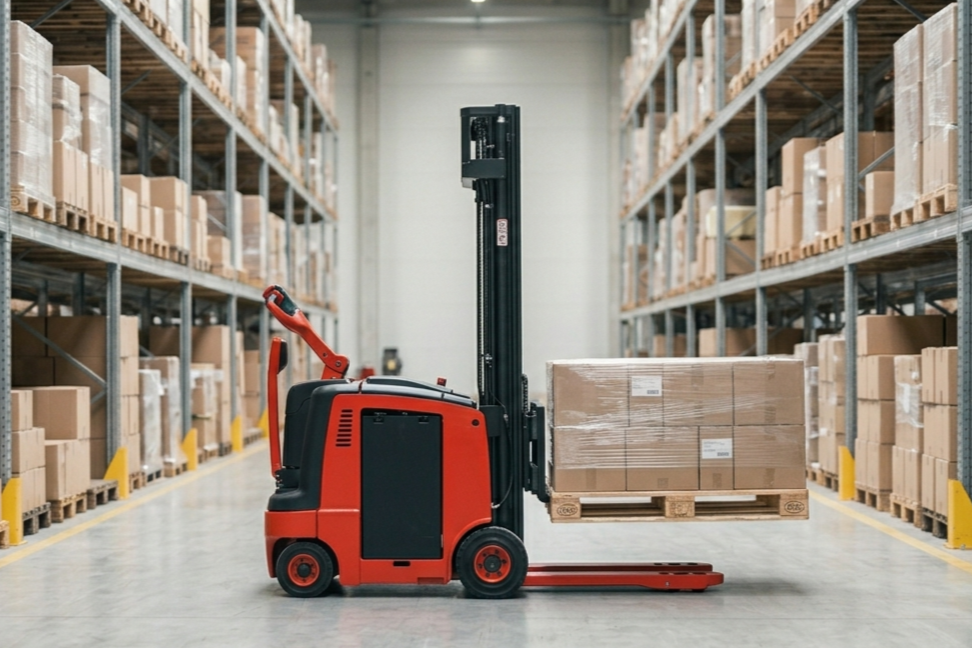
The Linde D series is a family of electric pedestrian pallet stackers from Linde Material Handling, used for low and medium-level stacking and short-distance pallet movement in warehouses, distribution centres, retail back-of-house environments and light industrial sites. The series spans twelve model designations across a nominal capacity range of roughly 400 kg to 1,600 kg.
This profile is based on AssetBase data and covers the D04, D06, D08, D08 M, D10, D10 M, D12, D12 M, D14, D14 M, D16 and D16 M. The numbers in each model name correspond to nominal lift capacity in 100 kg increments, with the M suffix marking a configuration variant alongside the base model.
In the wider pallet stacker - electric market, the D series sits inside Linde's pedestrian range. It runs alongside the company's rider stackers, low-lift pallet trucks, order pickers and reach trucks, which cover the same warehouse workflows from different angles.
The takeaway: twelve pedestrian electric pallet stackers in a single family, spanning the light to mid-range capacity bands.
Linde D series models covered
The twelve D series designations group naturally by nominal capacity. The lightest units sit at 400 kg and 600 kg, the middle of the family covers 800 kg through 1,200 kg, and the heavier units cover 1,400 kg and 1,600 kg. From the 800 kg band upwards, each capacity is offered as both a base configuration and an M variant.
The takeaway: the family scales evenly across seven capacity bands, all in a single pedestrian walk-behind format.
What the Linde D series is used for
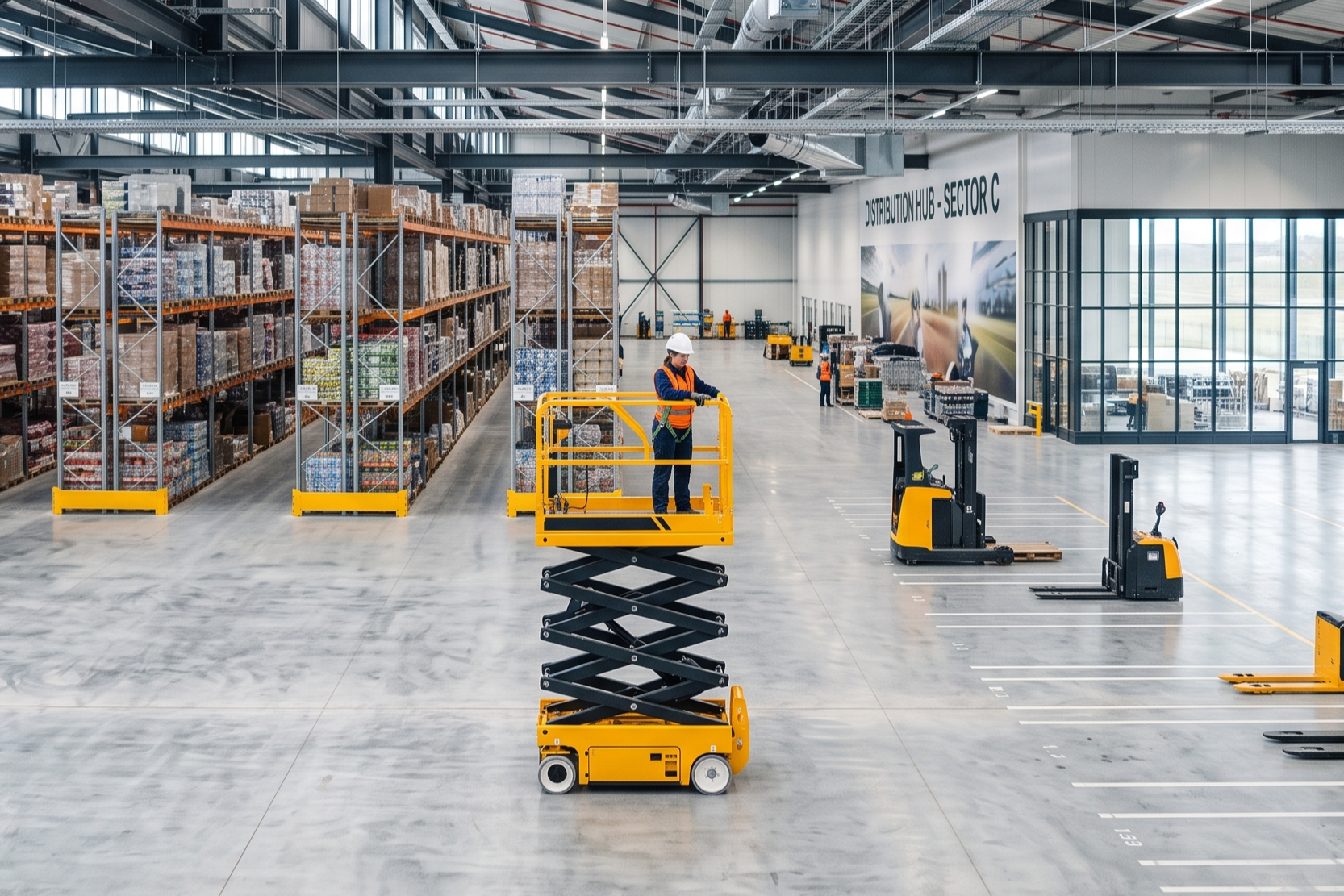
Most D series units operate around goods receiving, picking and replenishment workflows. Operators lift incoming pallets to ground level or into low and medium racking, transfer them between bays, and stage them near loading docks or production lines. The pedestrian format keeps the operator close to the load, which suits short, frequent movements in tight aisles, goods lifts and dock approaches.
Across a 400 kg to 1,600 kg capacity range, the family covers a wide span of pallet weights. The lighter models suit retail goods, light manufacturing components and packaged consumer products. The mid-range and heavier units take on standard pallet weights in distribution centres, mixed warehousing and cold storage.
Battery-electric drive systems make the units suitable for indoor environments without combustion exhaust, which matters in food handling, pharmaceutical storage and any setting where air quality has to be controlled. Outdoor use is limited. Pallet stackers in this class are built for smooth, protected surfaces, not yard work or uneven ground.
Variants and configurations explained
Suffixes and configuration codes on D series stackers signal operational differences rather than changes to the underlying base unit. The M variant runs alongside the standard model at the same nominal capacity, with operational differences in the build that suit specific workflows. Mast and battery options sit alongside the variant code and shape lift height and shift coverage.
The main operational difference between variants is the build behind the same capacity rating, not the rated load itself.
Key specification signals
The Linde D series spans 400 kg to 1,600 kg of nominal lift capacity across twelve model designations. All units share the same pedestrian walk-behind operator format. In practice, three values capture most of the difference between two units in the family: capacity (in 100 kg steps from D04 to D16), mast configuration, and battery type.
The cleanest single comparison line is nominal lift capacity, which moves in even 100 kg steps across the range. Lift height, energy use and shift coverage vary with mast and battery choice, so those values are configuration-dependent rather than fixed to a single model number.
The takeaway: capacity is the clean comparison line across the family; lift performance and energy use depend on configuration.
A more detailed technical profile is available in AssetBase.
Energy use and lifecycle CO₂ context
Annual energy use on a pedestrian pallet stacker depends more on operating hours than on the model itself. The same D series unit running two shifts a day in a distribution centre carries materially higher annual energy use, and therefore higher operational CO₂, than the same unit running a few hours a day in a retail back-of-house. The local electricity grid emissions factor then sets how much of that energy translates into CO₂.
EmissionBase® helps separate operational energy from broader lifecycle CO₂ assumptions such as production, battery or engine system, transport, maintenance and end-of-life treatment. Treating these layers separately gives a more honest view of where emissions actually come from for a given asset in a given operating context.
How this asset fits into wider pallet stacker - electric coverage
Within the Linde range, the D series sits next to higher-capacity rider stackers, low-lift pallet trucks for ground-level horizontal transport, order pickers for picking workflows, and reach trucks for higher racking. A typical warehouse runs a mix of these formats, with the D series covering pedestrian stacking from light pallets through to mid-range duty.
Across other makes, the pallet stacker - electric subcategory is well populated. Toyota, Jungheinrich, Crown, Hyster, Yale and STILL all produce comparable pedestrian stacker families across similar capacity bands. The wider taxonomy also includes adjacent asset types such as walkie stackers, pallet trucks and order pickers, which can serve overlapping workflows depending on lift height, capacity and operator format.
The D series therefore fills the pedestrian-stacker slot inside a mixed warehouse fleet.
.png)
.png)
.png)
.png)
.png)
.png)